 +(91) 9867215033
 info@ujjwalengineers.com
 Maharashtra, Gujarat, India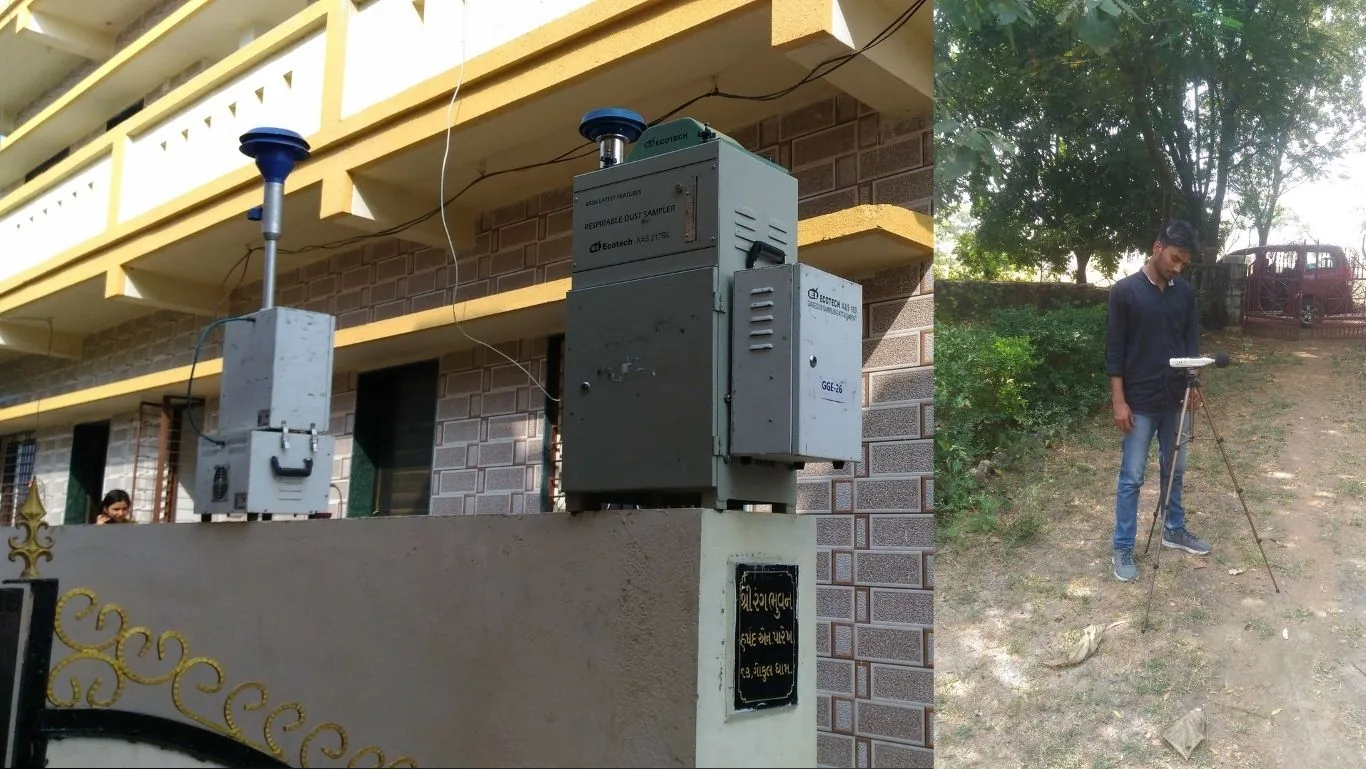
Two different noise questions
Industrial sites face two separate obligations, and they are routinely confused:
- Ambient noise - what the plant emits into its surroundings, governed by the Noise Pollution (Regulation and Control) Rules, 2000, with separate day and night limits by area category
- Workplace noise - what operators are exposed to, governed by the Factories Act and its state rules, measured as an eight-hour equivalent exposure
A site can comply at the boundary and still be exposing operators well beyond the limit. The two need different instruments, different sampling and different corrective action.
What a noise survey covers
- Day and night ambient measurement at the boundary and at nearby receptors
- Workplace dosimetry for operators on high-noise equipment
- Octave band analysis, which identifies the frequency causing the problem and therefore what will actually attenuate it
- Noise contour mapping across the plant, so control effort goes where exposure is
- A control plan - enclosure, damping, relocation or PPE, in that order of preference
Why octave band analysis matters
An overall dB(A) figure tells you there is a problem, not what to do about it. Low-frequency noise from a large fan passes straight through an enclosure designed for high-frequency noise. Measuring by frequency band is what turns a compliance number into an engineering decision.
Frequently asked questions
What are the ambient noise limits in India?
Under the Noise Rules 2000: industrial areas 75 dB(A) day and 70 night, commercial 65 and 55, residential 55 and 45, silence zones 50 and 40. Day is 6am-10pm.
How often should workplace noise be measured?
Annually as a baseline, and again after any change to machinery, layout or shift pattern. A new compressor can move an entire area above the exposure limit.
Can you help reduce noise, not just measure it?
Yes. The survey identifies dominant sources by frequency band, and we specify enclosures, damping or relocation accordingly. PPE is the last resort, not the first.
Is this needed for consent compliance?
Most consents carry a noise condition and require periodic monitoring records. It is also a standard finding in a compliance audit when the records are missing.





 As per MOEF & CC’s (Govt. of India) Office Memorandum F.
No. 22-34/2018-IA.III dated 9th August 2018 Self-Environmental Audit shall be conducted annually. Every
three years third party environmental Audit shall be carried out.
As per MOEF & CC’s (Govt. of India) Office Memorandum F.
No. 22-34/2018-IA.III dated 9th August 2018 Self-Environmental Audit shall be conducted annually. Every
three years third party environmental Audit shall be carried out.