 +(91) 9867215033
 info@ujjwalengineers.com
 Maharashtra, Gujarat, India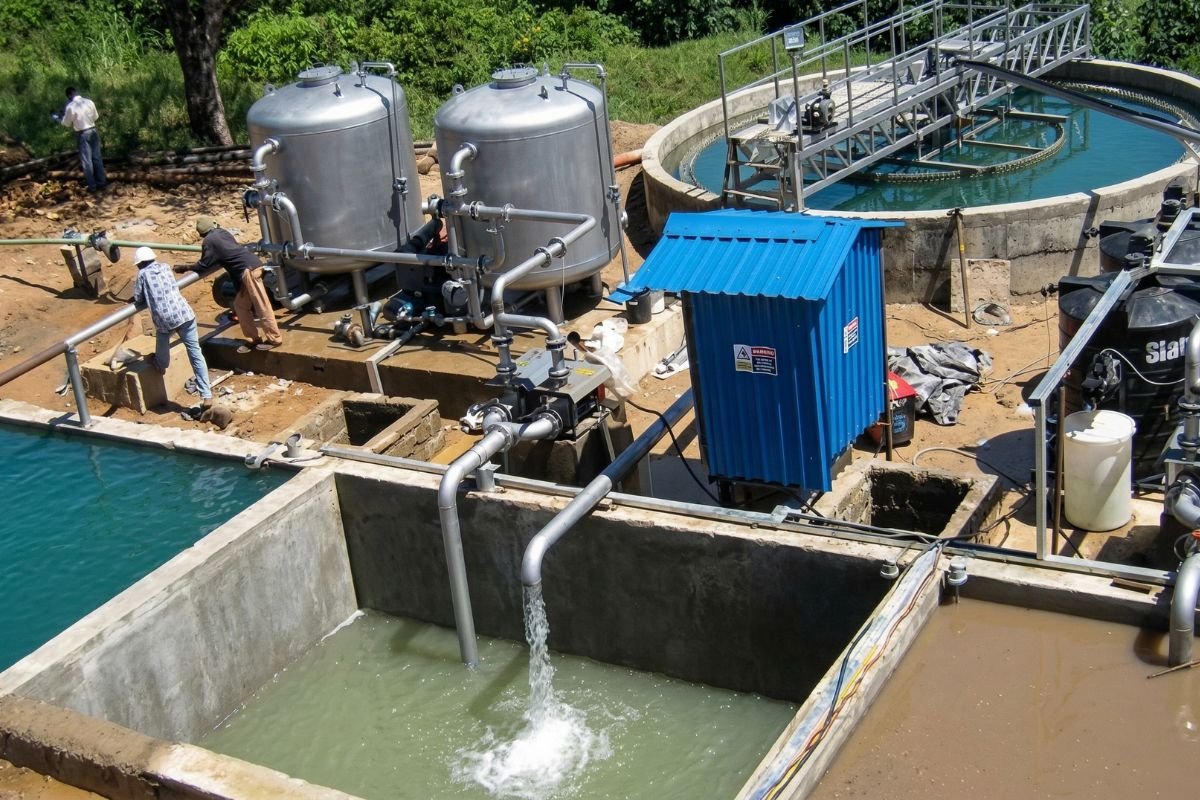
What an ETP consultant actually does
An effluent treatment plant is designed around one specific effluent, not from a catalogue. As an ETP consultant we start with characterisation - flow, COD, BOD, TDS, pH swing, colour, toxicity and how much all of that varies across a shift - and design backwards from the discharge standard in your consent.
Most failing ETPs we are called to were not built wrong. They were built for an effluent the plant no longer produces, after a product mix or capacity change that nobody translated into a treatment requirement.
Where ETP projects usually go wrong
- Design on nameplate flow. Peak shift load, not average, sizes the equalisation tank - and an undersized equalisation tank destabilises everything downstream
- Ignoring shock loads. A single batch dump of solvent or high-TDS liquor can kill a biological stage for days
- No sludge plan. Sludge is a hazardous waste with its own authorisation, storage and disposal cost, and it is routinely left out of the operating budget
- Treating recovery as an afterthought. Where water is scarce or expensive, recovery should shape the design, not be bolted on later
Our scope
- Effluent characterisation and treatability study, including bench trials
- Process design - primary, biological and tertiary stages selected for your effluent rather than a standard train
- Detailed engineering, equipment specification and vendor evaluation
- Erection, commissioning and stabilisation of the biological stage
- Operator training and a written operating philosophy
- Consent documentation for MPCB or GPCB, and support during inspection
Upgrading an existing ETP
A large share of our work is on plants that already exist and no longer meet consent conditions, or that cost too much to run. That work starts with a performance audit against the original design basis - which frequently shows the plant is doing exactly what it was designed to do, for an effluent that has since changed.
ETP, STP and ZLD
An ETP treats industrial process effluent. A sewage treatment plant treats domestic sewage - different load, different biology, different consent condition. Where discharge is not permitted at all, the ETP becomes the front end of a zero liquid discharge train, with reverse osmosis for volume reduction and an evaporator on the reject.
If your unit sits on an estate served by a common effluent treatment plant rather than discharging independently, the scope of work is usually different - see our note on CETP versus ETP, or go straight to CETP membership and compliance.
Frequently asked questions
How much does an ETP cost?
It follows from flow and effluent strength, not floor area. A high-COD pharma effluent at low flow can cost more to treat than a large volume of lightly contaminated wash water. We quote after characterisation, because any number offered before that is guesswork.
How long does it take to build?
Typically four to eight months from design freeze to stable operation for a mid-size industrial ETP. The biological stage needs several weeks to stabilise after commissioning - that period cannot be compressed, and plans that ignore it slip.
Can you guarantee we meet consent limits?
Yes, where we control the process design. Performance guarantees are written against the specific parameters in your consent, not against generic outlet standards.
Do you handle the MPCB or GPCB paperwork too?
Yes. The treatment scheme and the consent application are prepared together, so the plant you build is the plant the board approved.





 As per MOEF & CC’s (Govt. of India) Office Memorandum F.
No. 22-34/2018-IA.III dated 9th August 2018 Self-Environmental Audit shall be conducted annually. Every
three years third party environmental Audit shall be carried out.
As per MOEF & CC’s (Govt. of India) Office Memorandum F.
No. 22-34/2018-IA.III dated 9th August 2018 Self-Environmental Audit shall be conducted annually. Every
three years third party environmental Audit shall be carried out.