 +(91) 9867215033
 info@ujjwalengineers.com
 Maharashtra, Gujarat, India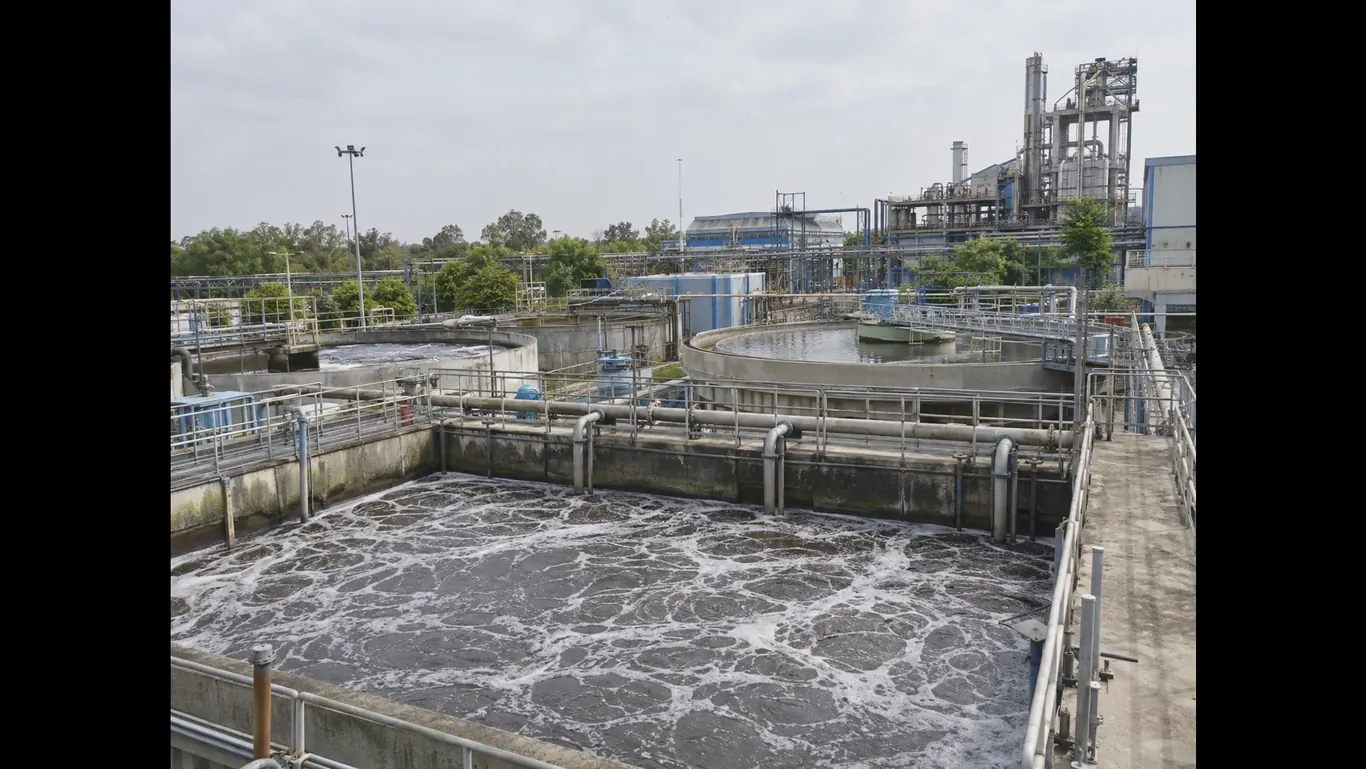
Two different questions get asked using the same word. "Do we need an ETP?" can mean a factory building its own treatment plant to discharge independently, or it can mean a factory on an industrial estate trying to work out what the common facility expects from it. Those are different problems, with different costs and different consultants attached to them, and conflating the two is where most confusion on this subject starts.
Two different arrangements, not two names for the same thing
An ETP is treatment plant you build and run yourself. A CETP is a shared facility, run by an operator, that a group of units on the same estate send their effluent to. Being connected to a CETP does not remove the need for treatment on your own site - it changes what that treatment has to achieve.
On estates like Taloja, Ambernath and most MIDC belts in the Mumbai, Thane and Navi Mumbai region, the CETP is not an alternative you can opt out of if you would rather build your own full plant. Consent is typically conditioned on connecting to it.
Why "we are on the CETP" does not mean treatment is someone else's job
This is the assumption that causes the most trouble. A CETP is designed around inlet norms - the pollutant limits it will accept from each member unit, not the limits it will produce at its own outlet. Send it raw or under-treated process effluent and two things happen: your unit is in violation of its own consent condition, and the biological treatment that the CETP relies on for every other member can be disrupted by whatever you sent.
What most units on a CETP actually need on site is pre-treatment - equalisation, neutralisation, removal of whatever is specific to their process - sized to bring their effluent down to the CETP's inlet norms, not down to final discharge norms. It is real equipment and it is commonly undersized, because it gets planned as an afterthought to the membership application rather than as the engineering problem it is.
Inlet norms are not the same everywhere
Every CETP publishes its own inlet norms, set by what its own design can handle and by the mix of industries it was built to serve. A CETP built around textile and dyeing units has a different tolerance than one built around pharmaceutical intermediates. Taking a generic pre-treatment specification from another estate and applying it to yours is a common and expensive mistake - the numbers that matter are the ones your specific CETP operator issues, not a standard table.
When you genuinely need a full ETP instead
- Your unit is not on an estate served by a CETP, and you are discharging to a water body or on land under your own consent.
- Your effluent volume or character is outside what the local CETP is designed to accept at any level of pre-treatment, which happens with some pharmaceutical and specialty chemical processes.
- You are pursuing zero liquid discharge, where the target is no effluent leaving the site at all, on the CETP or otherwise - see our note on ZLD in India.
In each of these cases the scope is a full ETP, sized against final discharge norms rather than a CETP's inlet norms, and it is a materially larger project.
Where this connects to the rest of your compliance file
Effluent quality at your point of discharge - whether that is to a CETP or independently - is a standing condition of your Consent to Operate, not a one-time design exercise. It is checked at inspection, and it is one of the figures that has to agree with your Form-V environmental statement and your water cess return. A water audit that establishes your actual effluent quantity is usually the right starting point for either a CETP pre-treatment scheme or a full ETP, because sizing either one without real numbers is how both end up undersized.
If your unit is in Taloja, Ambernath or another MIDC estate and you are not certain which side of this you are on, that is worth establishing before your next consent renewal rather than at inspection.
Frequently Asked Questions
If we are connected to a CETP, do we still need our own treatment?
Almost always, yes. A CETP accepts effluent that already meets its inlet norms - it is not designed to take raw process discharge. What you need on site is usually called pre-treatment rather than a full ETP, but it is real treatment equipment, not a formality. Sending untreated or under-treated effluent to the common plant is a consent violation even though the water never reaches a river directly.
What are inlet norms, in practice?
The pollutant limits - COD, BOD, TSS, pH, specific contaminants relevant to your process - that the CETP will accept from a member unit. They are stricter than final discharge norms in some parameters, because the common plant is designed around an assumed mix of everyone's effluent. One unit sending effluent outside that assumption can upset the biological treatment for every other member.
Is CETP membership optional if we can afford our own full ETP and direct discharge?
On most Maharashtra industrial estates, no. Where a CETP exists, MPCB consent is typically conditioned on connecting to it rather than discharging independently, regardless of whether your own treatment could meet final norms. The estate's effluent management is designed around the common facility, not around individual exceptions.
What does a CETP consultant actually do that a plumber or fabricator does not?
Establishes what your actual effluent characteristics are, sizes pre-treatment against the specific inlet norms of your CETP (which vary estate to estate), handles the membership application and the periodic compliance testing the CETP operator requires, and manages the relationship when your discharge is flagged - which happens to most units at some point.
Can the same consultant handle both CETP membership and an on-site ETP?
Yes, and there is a real advantage to that. The two are frequently sized together - what you treat on site is a direct function of what the CETP will accept, so a single water balance and a single treatment scheme covering both stages avoids the mismatch that happens when they are designed by two different parties working from different assumptions.
Not sure which side of this you are on?
Send us your effluent quantity and your estate's CETP inlet norms if you have them. We will tell you plainly whether you need pre-treatment, a full ETP, or CETP membership support - and size it against real numbers rather than a standard package.
Talk to us about effluent treatment