 +(91) 9867215033
 info@ujjwalengineers.com
 Maharashtra, Gujarat, India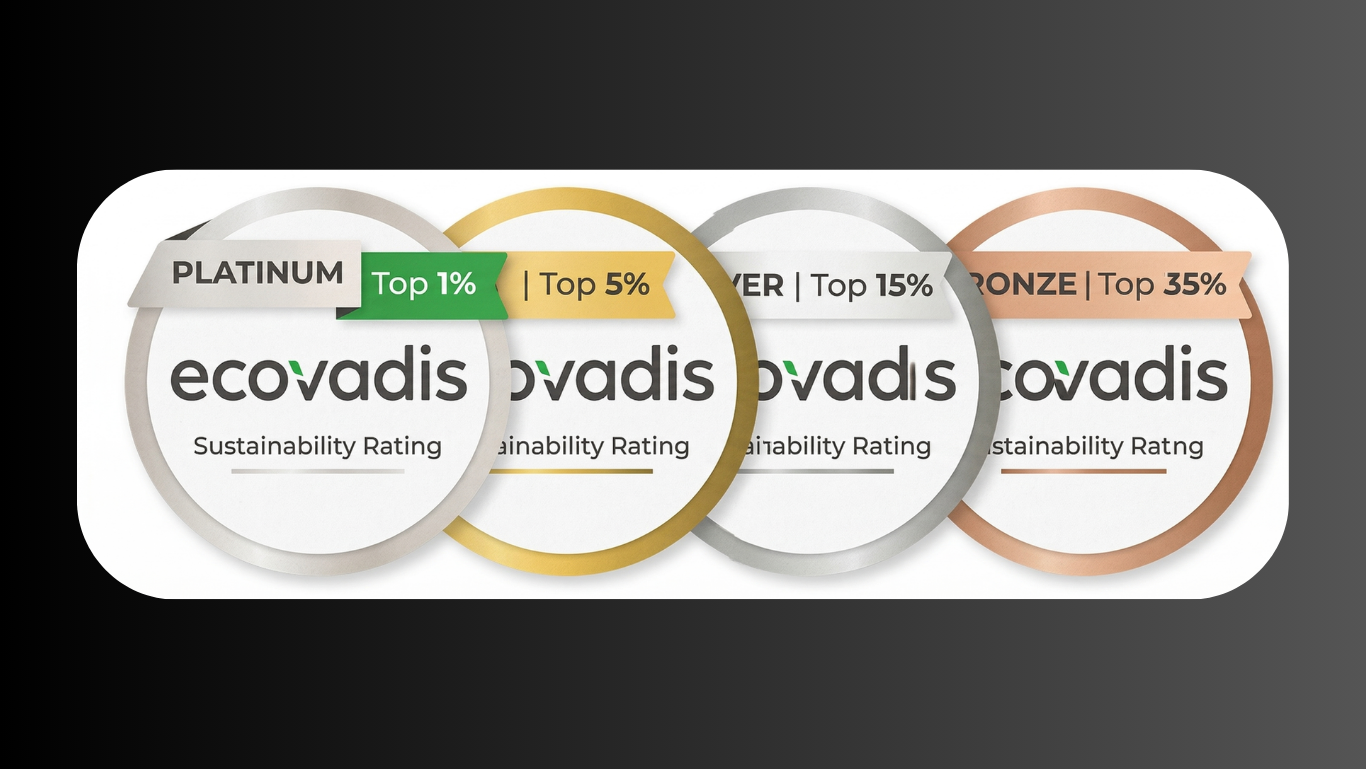
If a large customer has asked you to complete an EcoVadis assessment, it is usually not optional in practice. Increasingly it sits inside supplier onboarding and contract renewal, which makes the score a commercial issue rather than a reporting one.
The good news is that EcoVadis is unusually transparent about how it scores. Once you understand the mechanism, improvement becomes systematic.
What EcoVadis actually is
EcoVadis is a sustainability ratings provider. Companies complete a questionnaire, upload supporting documents, and receive a scorecard. Their customers can then view that scorecard rather than running their own audits. One assessment serves many customers, which is the point.
The four themes
| Theme | What it looks at |
|---|---|
| Environment | Energy and emissions, water, waste, pollution, product stewardship |
| Labour & Human Rights | Health and safety, working conditions, social dialogue, career management, non-discrimination |
| Ethics | Anti-corruption, anti-competitive practice, information security |
| Sustainable Procurement | Environmental and social practices in your own supply chain |
Theme weightings are not equal for everyone. They depend on your industry, size and the countries you operate in, so two companies answering identically can score differently.
The scoring mechanism, and why it surprises people
Within each theme, EcoVadis assesses three layers:
- Policies - do documented commitments exist, and are they specific?
- Actions - are there measures, certifications and processes actually implemented?
- Results - are KPIs tracked and reported, with trends over time?
The single most important thing to understand: EcoVadis scores the evidence you upload, not the good work you do. A company with excellent practices and thin documentation will score below a company with average practices and complete documentation. That is not a flaw in the method - a remote assessor can only assess what they can see.
Scores run from 0 to 100, and companies above the relevant thresholds receive medal recognition. Thresholds are percentile-based and are periodically revised, so the score needed for a given medal can shift between years even if your own score does not.
Where most first-time scores are lost
- Policies that are generic. A one-line statement that the company "respects the environment" scores close to nothing. Policies need scope, ownership and specifics.
- No quantitative results. This is the most common gap by far. Actions without measured outcomes cap your score. Energy consumption, emissions, waste generated, accident frequency - numbers, tracked over time.
- Sustainable Procurement left blank. Many companies simply skip it, and lose an entire theme. Even a basic supplier code of conduct and a supplier assessment process is far better than nothing.
- Evidence that does not match the answer. Uploading a document that does not actually demonstrate the claim scores as unsupported.
- Undated or unsigned documents. Assessors need to see that a policy is current and formally adopted.
A practical improvement sequence
- Read your scorecard properly. It lists strengths and improvement areas per theme. That list is effectively your work plan, written by the assessor.
- Fix the weakest theme first. Because of how weighting works, lifting a very low theme usually moves the total more than improving one that is already strong.
- Close the "Results" gap. Start tracking KPIs now, even if the first year's numbers are unremarkable. Trends need a starting point.
- Formalise what you already do. Most companies have far more practice than paperwork. Writing down an existing process is the cheapest available improvement.
- Build the evidence file continuously. Collecting documents in the fortnight before reassessment is how gaps get baked in for another year.
What connects to what
The Environment theme draws directly on work you may already have underway. A GHG emission inventory gives you the emissions KPIs. Your statutory compliance records support the pollution and waste sections. An environmental audit produces exactly the kind of documented management evidence EcoVadis rewards. Companies that treat these as one programme, rather than separate exercises, find each one cheaper.
Frequently Asked Questions
How long does an EcoVadis assessment take?
The questionnaire itself is not long, but gathering credible evidence usually is - most of the effort goes into locating, dating and formalising documents. Companies preparing for the first time should allow several weeks. Evaluation by EcoVadis after submission takes additional time, which varies.
What is a good EcoVadis score?
It depends on what your customers require, and medal thresholds are percentile-based and periodically revised. Rather than targeting an absolute number, find out what your key customers expect, since that is the score that actually affects your commercial position.
How often do we need to be reassessed?
Scorecards are valid for a defined period, commonly a year, after which reassessment is expected. Because improvement areas from the previous scorecard are visible, reassessment without addressing them tends to produce a similar result.
Can we improve our score without major investment?
Frequently yes, particularly on a first assessment. A large share of lost points comes from documentation gaps rather than performance gaps - undocumented policies, untracked KPIs and an unanswered procurement theme. Formalising existing practice is usually the fastest available gain.
Is EcoVadis the same as an ESG report or a GHG inventory?
No. EcoVadis is a third-party rating based on evidence you submit across four themes. A GHG inventory measures emissions and feeds into it. An ESG report is your own published disclosure. They overlap in underlying data but serve different purposes.
Need expert help with this?
We prepare companies for EcoVadis assessments and reassessments, from evidence gap analysis through to submission and corrective action planning.
Improve Your EcoVadis Score