 +(91) 9867215033
 info@ujjwalengineers.com
 Maharashtra, Gujarat, India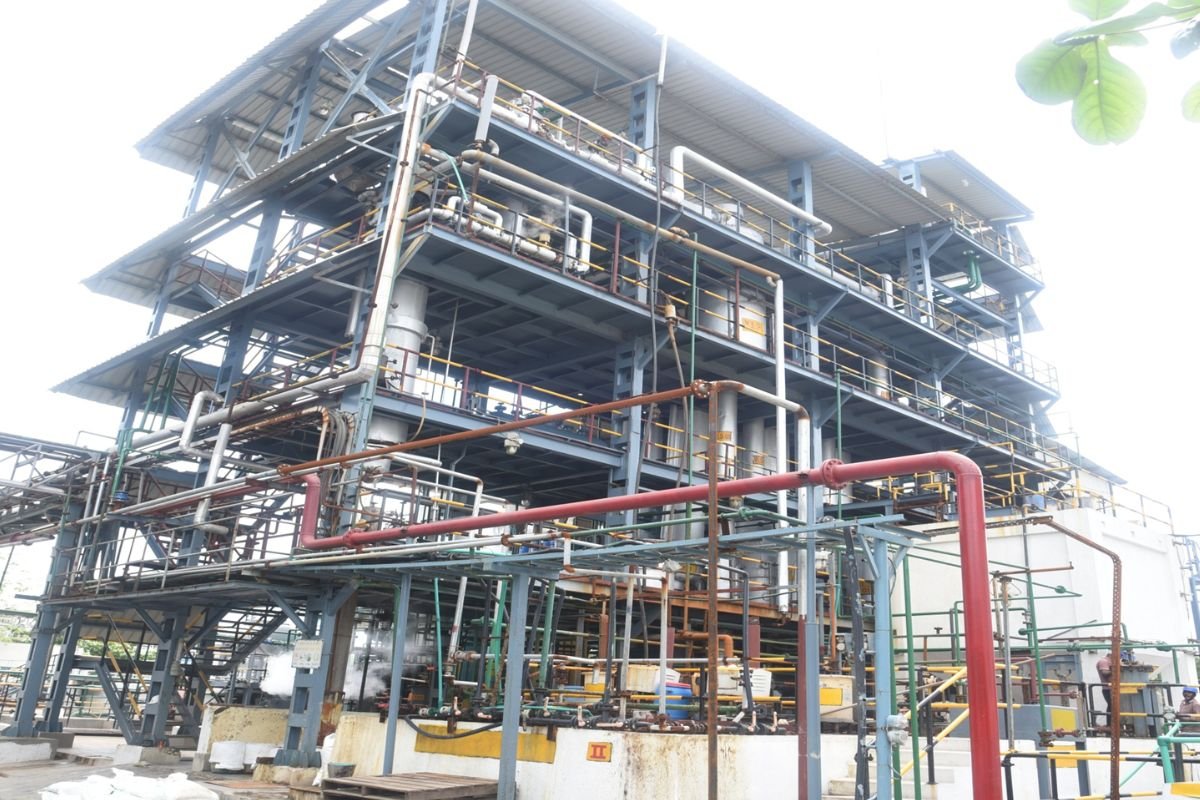
Once a plant commits to Zero Liquid Discharge, the next decision is which evaporation and drying technology to install. MEE, MVR and ATFD get compared as if they were alternatives. They are not, entirely - and understanding that is the fastest way to a sensible answer.
Start here: MEE and MVR are genuine alternatives to each other - both concentrate liquid effluent by evaporation, differing mainly in how they supply energy. ATFD is not an alternative to either. It sits downstream of them and dries the concentrate they produce. Most ZLD trains use MEE or MVR, plus ATFD.
What each one does
Multiple Effect Evaporator (MEE)
An MEE evaporates water using steam, in a series of stages called effects. Vapour generated in the first effect becomes the heating medium for the second, and so on. Each additional effect improves steam economy, at the cost of more vessels, more complexity and more capital.
Mechanical Vapour Recompression (MVR)
An MVR compresses the vapour it produces and reuses it as its own heating medium. That removes the need for continuous external steam and shifts the energy demand to electricity driving the compressor.
Agitated Thin Film Dryer (ATFD)
An ATFD takes the concentrated slurry leaving the evaporator and dries it to a handleable solid. Rotating blades spread the material as a thin film on a heated surface, which suits viscous, fouling and heat-sensitive materials that would foul a conventional dryer.
Comparison
| MEE | MVR | ATFD | |
|---|---|---|---|
| Role | Concentrates liquid effluent | Concentrates liquid effluent | Dries the concentrate to solid |
| Energy input | Steam | Electricity | Thermal, small duty |
| Operating cost driver | Steam price | Power tariff and reliability | Modest, small volume |
| Capital cost | Lower, rises with more effects | Higher | Moderate |
| Best where | Cheap or surplus steam exists | Steam is costly, power is reliable | Concentrate is viscous or fouling |
| Sensitive to | Scaling, steam availability | Power interruptions, compressor maintenance | Solids handling, blade wear |
| Alternative to | MVR | MEE | Nothing - it is a separate stage |
How to actually choose between MEE and MVR
Three questions settle it in most cases.
Do you have steam?
If the site already runs a boiler with spare capacity, or has surplus process steam, MEE is frequently the lower total-cost option. If steam would have to be generated specifically for the evaporator, that advantage disappears quickly.
How reliable is your power supply?
MVR depends on continuous compressor operation. On sites with frequent interruptions or weak supply, the operational risk is real and the backup arrangements add cost that should be counted in the comparison.
What is actually in the effluent?
This overrides both of the above. Scaling tendency, corrosivity, foaming behaviour and heat sensitivity narrow the options faster than any energy calculation. A stream that scales aggressively will dictate materials, tube configuration and cleaning regime regardless of which technology is chosen.
The mistake that costs the most: selecting technology from a comparison table before characterising the effluent properly. Design should follow a proper analysis of the actual stream across its real operating range - including the worst campaign, not the typical day.
What a complete train usually looks like
- Pre-treatment - remove suspended solids, oil and grease, reduce hardness
- RO - bulk volume reduction at the lowest energy cost. Every cubic metre removed here is one the evaporator never has to boil
- MEE or MVR - concentrate the RO reject towards saturation
- ATFD - dry the concentrate to a solid for authorised disposal
Getting stage 1 and 2 right is what makes stages 3 and 4 affordable. Plants that under-invest in pre-treatment and RO end up running an oversized, over-fouled evaporator for the life of the facility.
Frequently Asked Questions
Is MVR always cheaper to run than MEE?
Not always. MVR generally has lower operating cost where steam is expensive and power is reliable and reasonably priced, but it carries higher capital cost. On a site with surplus or cheap steam, a multiple effect evaporator can be the lower total-cost option over the plant's life. The comparison should use your actual steam and power costs.
Can ATFD replace an evaporator?
No. An ATFD dries a concentrated slurry to a solid; it is not designed to reduce a large volume of dilute effluent. It works downstream of an MEE or MVR, which do the bulk concentration first. A typical zero liquid discharge train uses one of those plus an ATFD.
How many effects should an MEE have?
More effects improve steam economy but add capital cost, complexity and footprint. The economic optimum depends on steam price, effluent volume and the concentration required, so it is a project-specific calculation rather than a standard number.
What determines whether our effluent will scale the evaporator?
Hardness and the presence of sparingly soluble salts are the main drivers, which is why softening and other pre-treatment ahead of the evaporator matter so much. Proper characterisation of the actual effluent, across its real operating range, is what allows scaling risk to be designed for rather than discovered.
Can an existing plant be retrofitted with MEE or MVR?
Yes, retrofits are common, though space, available utilities and existing effluent segregation constrain the options more than in a greenfield project. A retrofit should start with effluent characterisation and a review of whether streams can be segregated, since that often reduces the size of equipment needed.
Need expert help with this?
We design and install MEE, MVR and ATFD systems, and help select the right configuration based on your actual effluent characterisation.
Get a Technology Recommendation