 +(91) 9867215033
 info@ujjwalengineers.com
 Maharashtra, Gujarat, India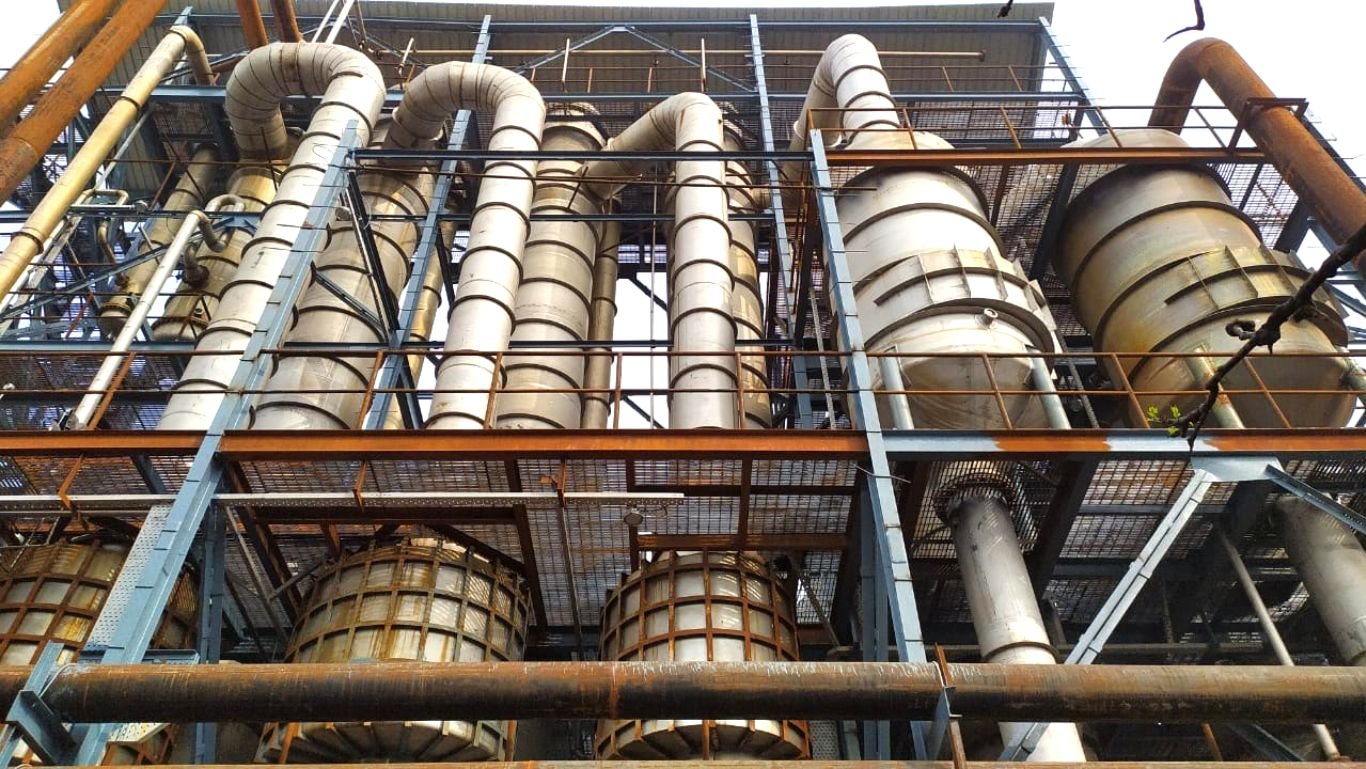
For a growing number of Indian industries, Zero Liquid Discharge has moved from being an aspiration to being a condition of operating. If your plant generates effluent and sits in a water-stressed or heavily regulated cluster, ZLD is likely to come up in your next consent renewal or inspection.
It is also one of the most capital-intensive commitments an industrial site can make. This guide explains what ZLD actually involves, which technologies do the work, and where projects most often go wrong.
What does Zero Liquid Discharge mean?
Zero Liquid Discharge means that no liquid effluent leaves the plant boundary. Wastewater is treated, concentrated and evaporated until the water is recovered for reuse and the dissolved solids are left behind as a dry or semi-dry residue for disposal.
The two outputs of a working ZLD system are therefore treated water — which goes back into the process, cooling towers or utilities — and solid salt or sludge, which is disposed of through an authorised route.
Worth being clear about: ZLD is not a single machine you purchase. It is a treatment train, usually four or five stages long, where each stage removes a different fraction of the problem. A weak stage anywhere in the chain compromises everything downstream.
Why Indian regulators push for ZLD
The pressure comes from several directions at once:
- Sector-specific directions. Highly polluting sectors — including textile dyeing and bleaching, tanneries, distilleries, and pulp and paper — have faced the strongest push towards ZLD or near-ZLD operation.
- Water scarcity. In stressed industrial clusters, recovering and reusing process water is increasingly the only way to secure supply for expansion.
- Consent conditions. ZLD requirements are frequently written directly into Consent to Operate conditions, which makes them enforceable obligations rather than recommendations.
- Clearance conditions. For projects that require Environmental Clearance, ZLD commitments made in the Environmental Management Plan become binding after clearance is granted.
Because requirements vary by sector, by state and by the specific cluster a plant sits in, the applicable position should always be confirmed with the concerned State Pollution Control Board rather than assumed from industry practice.
How a ZLD train actually works
Stage 1 — Pre-treatment
Before anything can be concentrated, the effluent has to be cleaned up. This typically means removing suspended solids, oil and grease, and adjusting pH. Hardness is often reduced through softening, because scaling is what kills downstream membranes and evaporator tubes.
Pre-treatment is the least glamorous stage and the most commonly under-designed. Almost every ZLD plant that underperforms in the field traces back to something that should have been removed here.
Stage 2 — Membrane concentration (RO)
Reverse Osmosis does the bulk of the volume reduction, and it does it at far lower energy cost than thermal methods. RO produces clean permeate that can be reused directly, and a much smaller volume of concentrated reject.
The economics of the entire ZLD plant hinge on this stage. Every cubic metre RO removes is a cubic metre the evaporator does not have to boil.
Stage 3 — Thermal concentration (MEE or MVR)
The RO reject still contains water, but at a salinity where membranes no longer work. This is where evaporation takes over — either a Multiple Effect Evaporator (MEE) or a Mechanical Vapor Recompression (MVR) system.
Both concentrate the stream towards saturation and recover distillate as reusable water. They differ mainly in how they supply the energy to do it.
Stage 4 — Drying (ATFD)
The concentrated slurry leaving the evaporator is dried to a handleable solid, most commonly in an Agitated Thin Film Dryer (ATFD). The output is a salt or powder that goes for authorised disposal or, in some cases, recovery.
Choosing between the technologies
| Technology | Role in the train | Energy profile | Best suited to |
|---|---|---|---|
| RO | Bulk volume reduction, water recovery | Lowest — electrical only | Low to moderate TDS streams; always the first choice where feasible |
| MEE | Thermal concentration of RO reject | Steam-driven; improves with more effects | Sites with available or cheap steam |
| MVR | Thermal concentration, vapour recompressed and reused | Electrical; typically lower running cost than MEE | Sites with reliable power and limited steam |
| ATFD | Final drying of concentrated slurry | Thermal; small volume, so modest total load | Handling viscous, fouling or heat-sensitive concentrates |
MEE or MVR? The question everyone asks
There is no universal answer, and the honest determinant is usually your site's energy situation.
MEE uses steam. If you already have surplus boiler capacity or cheap process steam, MEE is often the lower total-cost option. Adding effects improves steam economy, at the cost of more equipment and complexity.
MVR compresses the vapour it generates and reuses it as its own heating medium, so it runs largely on electricity rather than steam. Where power is reliable and steam is expensive or unavailable, MVR frequently wins on operating cost, though capital cost is typically higher.
In practice, the effluent's chemistry matters as much as the energy comparison. Scaling tendency, corrosivity and heat sensitivity narrow the options quickly, so the decision should follow characterisation of the actual stream rather than a generic comparison.
Where ZLD projects go wrong
- Designing on assumed effluent data. ZLD design should follow a proper characterisation of the actual stream across a realistic operating range, not a single grab sample taken on a good day.
- Skimping on pre-treatment. The cheapest stage to under-design and by far the most expensive to get wrong. Scaling and fouling costs show up every month for the life of the plant.
- Ignoring load variability. Batch operations produce peaks that a system sized on averages cannot absorb. Equalisation is not optional.
- Forgetting the salt. ZLD converts a liquid disposal problem into a solid one. The disposal route, authorisation and recurring cost need to be settled before commissioning, not after.
- Underestimating operating cost. Evaporation is energy-intensive. A plant that is affordable to build but not to run tends to quietly stop running.
- No monitoring plan. Demonstrating ZLD compliance requires records. Ongoing environmental monitoring and analysis should be designed in from the start.
Frequently Asked Questions
Is Zero Liquid Discharge mandatory in India?
There is no single blanket rule. ZLD requirements are applied through sector-specific directions, State Pollution Control Board consent conditions, and clearance conditions, and they are strongest for highly polluting sectors such as textile dyeing, tanneries, distilleries and pulp and paper. Whether ZLD applies to your plant should be confirmed with the concerned State Pollution Control Board for your sector, state and cluster.
What is the difference between ZLD and an effluent treatment plant?
A conventional effluent treatment plant treats wastewater so that it can be discharged within prescribed standards. A ZLD system goes further and eliminates liquid discharge entirely by recovering the water for reuse and converting the dissolved solids into a solid residue. ZLD normally builds on top of effluent treatment rather than replacing it.
Which is better, MEE or MVR?
It depends primarily on the energy available at your site. MEE is steam-driven and is often more economical where cheap or surplus steam already exists. MVR runs largely on electricity by recompressing its own vapour and typically has lower operating cost where power is reliable and steam is expensive. Effluent chemistry, including scaling and corrosion behaviour, also strongly influences the choice.
What happens to the salt produced by a ZLD plant?
The solid residue must be handled through an authorised disposal route, and in some cases can be recovered if it is sufficiently pure and there is a market for it. Because this becomes a recurring operational cost and a compliance obligation, the disposal route should be established during design rather than after commissioning.
Can existing plants be retrofitted for ZLD?
Yes, retrofits are common, though they are usually more constrained than greenfield installations because of space, utility capacity and existing effluent segregation. A retrofit normally begins with detailed effluent characterisation and a review of whether streams can be segregated, since keeping clean and contaminated streams separate significantly reduces the load the ZLD train has to carry.
Need expert help with this?
We design and install MEE, MVR, ATFD, RO and STP systems for Zero Liquid Discharge compliance across chemical, pharmaceutical and textile plants.
Discuss Your ZLD Requirement