 +(91) 9867215033
 info@ujjwalengineers.com
 Maharashtra, Gujarat, India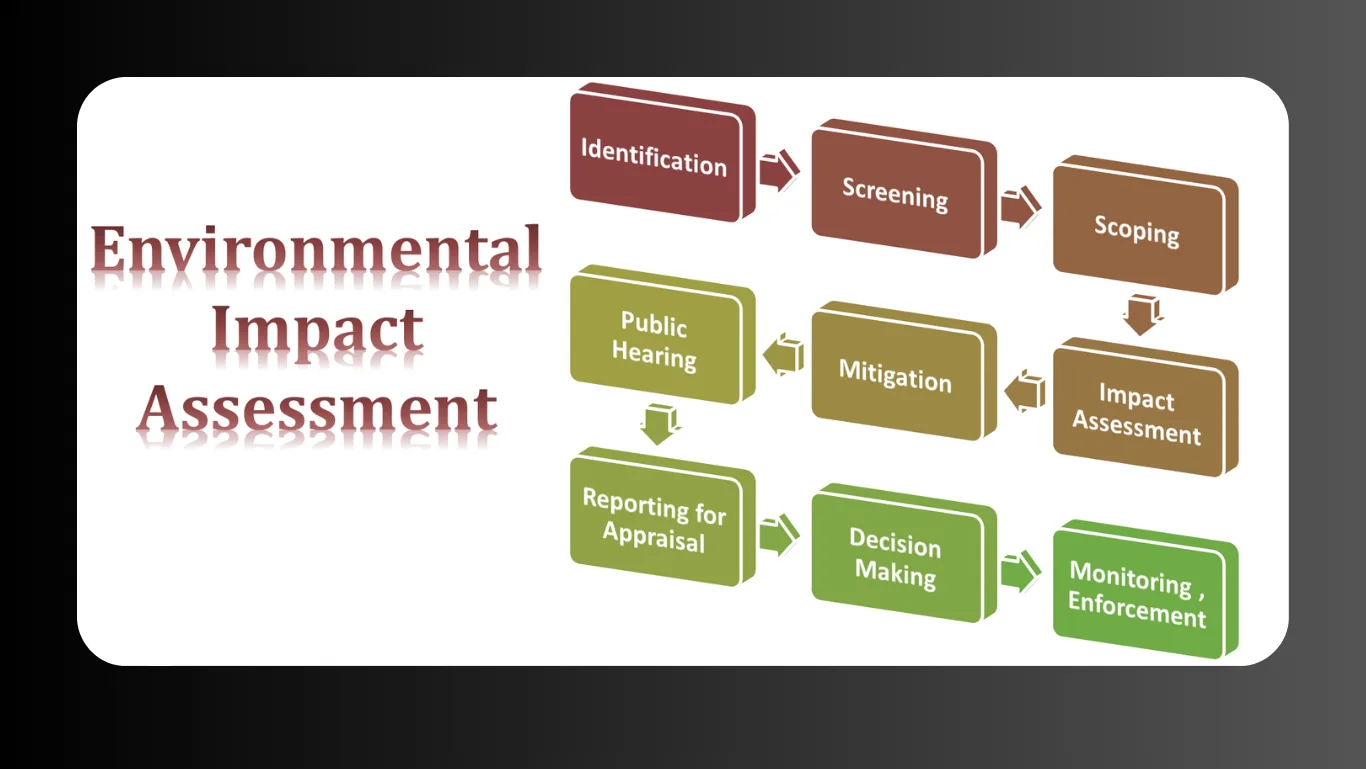
The category is fixed before a single line of the EIA is written, and it decides three things at once: who signs the clearance, whether you stand in front of a public hearing, and how much of the calendar the approval eats. Most of the disputes we are asked to fix started as a category assumed at Form-1 stage and corrected several months later.
The one-line difference
Category A is appraised centrally by the Expert Appraisal
Committee and cleared by the MoEFCC.
Category B is appraised by the SEAC and cleared by the
SEIAA in the State.
B1 carries a full EIA report and a public consultation.
B2 carries neither.
The Schedule decides, not your judgement
The Schedule to the EIA Notification, 2006 lists activities against thresholds - capacity, plant area, built-up area, output. Find your activity, read your number against the threshold, and the category follows. It is mechanical. A project is not Category B because its promoters consider its impact modest, and it is not Category A because the site is sensitive in a general sense.
One structural exception is worth knowing: where a State has not constituted an SEIAA or SEAC, Category B projects in that State are handled as Category A at the Centre until it is constituted.
The General Condition, which moves projects up
Location can override the Schedule. Under the General Condition, a Category B project is treated as Category A when it lies wholly or partly within the notified distance of any of the following:
- protected areas notified under the Wild Life (Protection) Act, 1972;
- critically polluted areas as notified by the Central Pollution Control Board;
- notified eco-sensitive areas;
- inter-State boundaries and international boundaries.
Ten kilometres is the figure most people quote, and it is the right starting point - but the boundary criterion in particular has been revisited by later amendments. Read the current text on PARIVESH before you build a project schedule on a distance you remember rather than one you have checked.
This is the single most common reason a project that budgeted for a State-level clearance ends up in the Central queue - the siting was fixed first and the category was checked afterwards.
B1 or B2: what actually changes
B2 is not a clearance-free route. Form-1, Form-1A where applicable, a pre-feasibility report, appraisal by the SEAC and grant by the SEIAA all still happen. What B2 avoids is the EIA study and the public consultation - which is where most of the calendar and most of the cost sit.
B1 runs the full sequence: Terms of Reference, baseline monitoring across a full season, the EIA and EMP report, public consultation, then appraisal. If you want that sequence laid out end to end, we have written it up separately in the environmental clearance process and timeline, and the study itself in what an EIA actually covers.
Side by side
| Category A | Category B1 | Category B2 | |
|---|---|---|---|
| Appraised by | Expert Appraisal Committee (Central) | SEAC (State) | SEAC (State) |
| Clearance granted by | MoEFCC | SEIAA | SEIAA |
| EIA / EMP report | Required | Required | Not required |
| Public consultation | Required, subject to the exemptions in the notification | Required, subject to the same exemptions | Not required |
| Terms of Reference stage | Yes | Yes | No |
| Realistic elapsed time | Longest - central queue plus a full baseline season | Long - same study burden, State queue | Shortest - appraisal on documents |
What it costs you in calendar time
The notification does set timelines. Terms of Reference are to be conveyed within sixty days of a complete application. The public consultation is to be completed within forty-five days of the State Pollution Control Board receiving the request. Appraisal is to be completed within sixty days of receipt of the final EIA report, and the regulatory authority is to decide within forty-five days of the appraisal committee's recommendation.
Treat those as a floor rather than a forecast. Baseline data collection alone is a full season, and the clock only runs on a complete application - most real delays come from the file being returned, not from the committee being slow. And the environmental clearance is only the first approval in the chain - the Consent to Establish from the State board follows it.
Where projects get this wrong
- Siting first, category later. The General Condition is discovered after land is bought and a State route has been budgeted.
- Declaring only the incremental capacity. Expansions and modernisations are read together with existing capacity. Splitting a project to sit below a threshold is the kind of thing that surfaces in litigation years later.
- Starting site work before the clearance. The violation route is slower, more expensive and public.
- Filing Form-1 under the wrong category. Refiling is not a correction, it is a restart, and it typically costs months.
If the categorisation is genuinely borderline, the cheapest hour you will spend on the project is the one spent reading the Schedule against your actual numbers before the application is drafted - not after the SEAC asks.
Regulatory positions described here are current as of August 2026. Notifications and office memoranda change - confirm the figures that apply to your project and your year before acting on them.
Frequently Asked Questions
Who decides whether my project is Category A or Category B?
The Schedule to the EIA Notification, 2006 does. Each listed activity carries thresholds - capacity, area or output - and your project's line item and number place it in Category A or Category B. It is a mechanical reading of the Schedule, not a judgement about how clean the project is.
Can a Category B project become Category A?
Yes. The General Condition promotes a Category B project to Category A when it lies wholly or partly within the notified distance of a protected area under the Wild Life (Protection) Act 1972, a critically polluted area notified by CPCB, a notified eco-sensitive area, or an inter-State or international boundary. Location can override the Schedule, which is why siting should be checked before the application is drafted.
Does a Category B2 project need an EIA report?
No. B2 skips both the EIA study and the public consultation. It still needs Form-1, Form-1A where applicable, a pre-feasibility report, appraisal by the SEAC and grant by the SEIAA - so it is a shorter route, not an exemption.
What happens if my State has no SEIAA or SEAC?
Where a State has not constituted the authority or the committee, Category B projects in that State are dealt with as Category A at the Central level until it is constituted.
Is an expansion assessed separately from existing capacity?
No. Expansion and modernisation are read together with the existing capacity for threshold purposes. Splitting a project or declaring only the incremental capacity to stay under a threshold is one of the more common reasons a clearance is later challenged.
Not sure which category your project falls under?
We handle categorisation, Form-1 and Form-1A preparation, ToR applications, EIA/EMP studies and appraisal support for Category A and Category B projects across Maharashtra and Gujarat.
Talk to our EC / EIA team