 +(91) 9867215033
 info@ujjwalengineers.com
 Maharashtra, Gujarat, India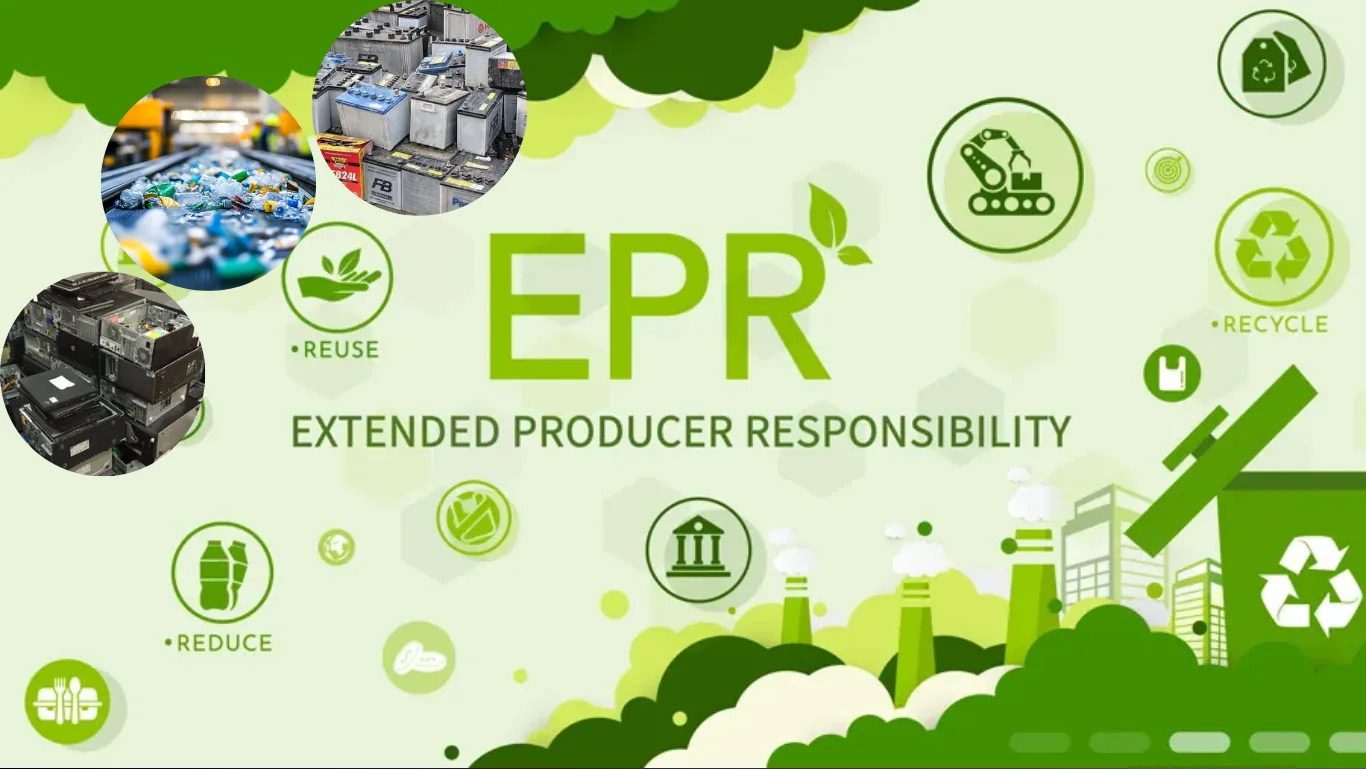
A third EPR obligation, filed separately
The Battery Waste Management Rules, 2022 replaced the Batteries (Management and Handling) Rules, 2001. They cover all four battery types - portable, automotive, industrial and electric vehicle - and they sit alongside, not inside, your plastic packaging and e-waste obligations.
You can be a producer without making a battery
A producer is a manufacturer, an importer or a brand owner placing batteries on the market. The clause that catches companies is the second one: if you import equipment, vehicles or devices with batteries inside, those batteries were placed on the Indian market by you.
Buying from an Indian distributor who imported the goods does not transfer the obligation either. What matters is who placed the battery on the market.
What we handle
- Applicability review - whether you are a producer at all, and for which battery types.
- Quantity reconstruction - three years of import and production data assembled from source records, not estimates.
- Registration on the CPCB EPR portal, or correction of a registration filed on the wrong basis.
- Returns and record-keeping built so that portal filings reconcile against customs and production data.
- EPR certificate procurement from recyclers registered for the right battery type and period.
- Labelling review against the current marking requirements.
What has changed recently
- February 2025. Digital labelling was permitted - a barcode or QR code carrying EPR registration details on the battery, vehicle, packaging or brochure - with relaxed marking for trace cadmium and lead.
- Recovery targets are stepping up through the Schedule, rising towards ninety per cent for EV and portable batteries and sixty per cent for automotive and industrial batteries by 2026-27.
- Minimum recycled content in new batteries begins in FY 2027-28 and rises thereafter. That is a sourcing and design decision, not a filing one, so it needs to enter procurement plans well before the deadline.
- Certificates now trade on a regulated platform and portal access has been consolidated under a single sign-on.
Where it goes wrong
- Assuming one EPR covers the others. Three rules, three registrations, three return cycles.
- Numbers that do not reconcile. When import documentation and portal returns disagree, the return is the one that gets questioned.
- Certificates from the wrong source - a certificate only counts if the counterparty is registered for that battery type and that period.
- No internal owner. The obligation sits between procurement, logistics and EHS, which in most organisations means it sits with nobody.
Background reading on how the rules work is in our guide to battery waste EPR in India, and on how the three obligations differ in e-waste EPR vs plastic EPR.
Frequently Asked Questions
We only import machines that contain batteries. Does this apply to us?
Very likely yes. The obligation attaches to placing batteries on the Indian market, and batteries inside imported equipment, vehicles or devices are still batteries placed on the market. This is the most common way a company discovers it has been an unregistered producer for a year or two.
Does our plastic or e-waste EPR registration cover batteries?
No. Battery waste, e-waste and plastic packaging are three separate obligations under three separate sets of rules, with separate registrations, separate returns and separate certificates. Holding one does not discharge another.
What happens if the collection target is missed?
The rules provide for environmental compensation on the shortfall, and unresolved non-compliance puts the registration itself at risk. Compensation does not extinguish the obligation - the shortfall is generally carried forward as well.
Is this different from hazardous waste authorisation?
Yes. Hazardous waste authorisation governs how waste is handled at your own site. Battery EPR governs your obligation for the batteries you placed on the market, wherever they end up.
How far back do we need to reconstruct our figures?
Usually three years of import and production records. Reconstructing from customs data rather than memory matters, because the portal return and the import documentation are both discoverable and are read together.





 As per MOEF & CC’s (Govt. of India) Office Memorandum F.
No. 22-34/2018-IA.III dated 9th August 2018 Self-Environmental Audit shall be conducted annually. Every
three years third party environmental Audit shall be carried out.
As per MOEF & CC’s (Govt. of India) Office Memorandum F.
No. 22-34/2018-IA.III dated 9th August 2018 Self-Environmental Audit shall be conducted annually. Every
three years third party environmental Audit shall be carried out.