 +(91) 9867215033
 info@ujjwalengineers.com
 Maharashtra, Gujarat, India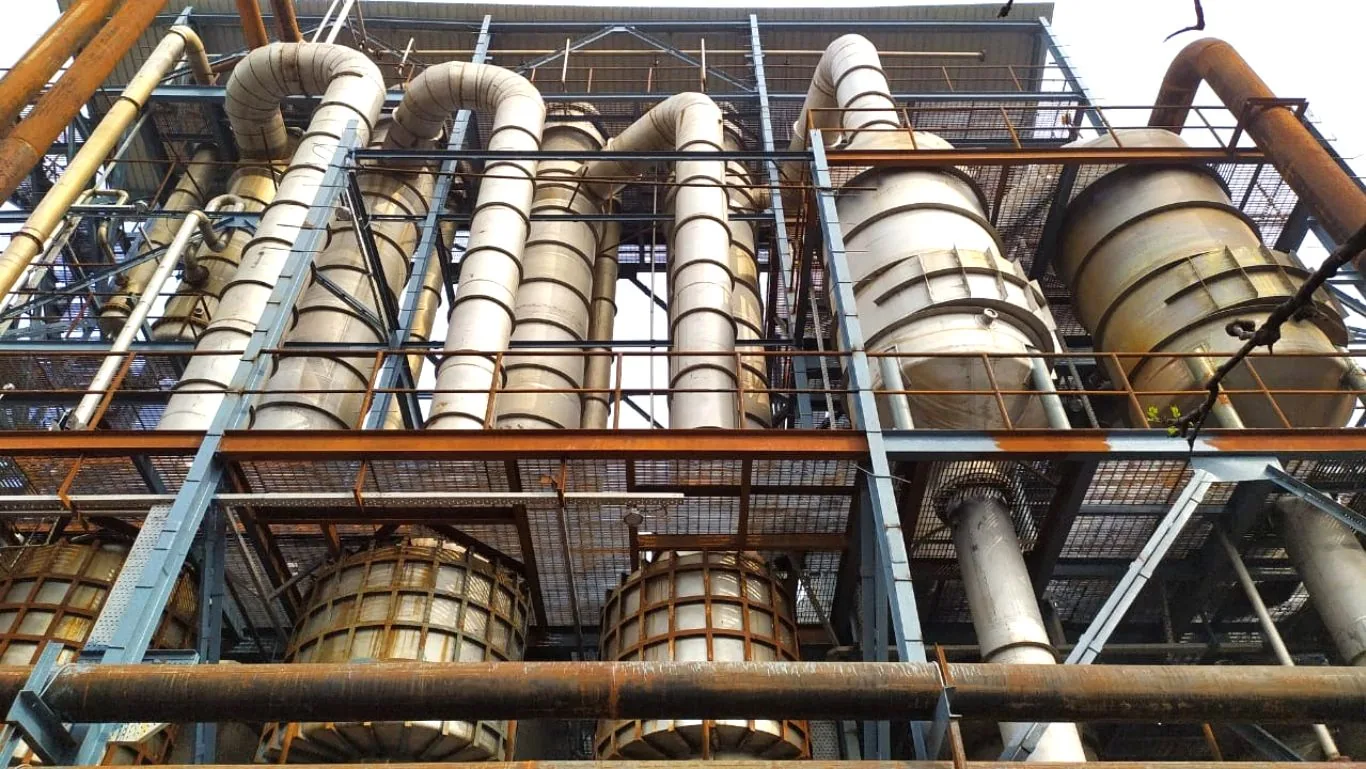
What zero liquid discharge actually means
Zero liquid discharge means no liquid effluent leaves your site. Water is recovered and reused; whatever is left becomes a dry solid that goes for authorised disposal. For many industries in Maharashtra and Gujarat it is no longer a choice - it is written into the consent.
It is not a single machine. A ZLD plant is a train of units, and the economics are decided by how well they are matched to each other and to your effluent.
The train, and what each stage costs you
| Stage | Job | Cost driver |
|---|---|---|
| ETP | Remove organics and suspended solids | Cheap per m³ - do as much here as possible |
| RO | Recover 70-80% of the water | Power. Still far cheaper than evaporating |
| MEE or MVR | Concentrate the RO reject | Steam or compressor power - the biggest running cost |
| ATFD | Turn concentrate into a handleable solid | Thermal energy, plus solid disposal |
Where ZLD projects lose money
- Under-recovering at the RO. Every cubic metre the RO does not recover has to be boiled instead. A few percent of recovery moves the steam bill for the life of the plant
- Sizing the evaporator on paper flow. Evaporators are the most expensive item to oversize and the most disruptive to undersize
- No plan for the salt. ZLD produces a mixed salt that is usually a hazardous waste. Its authorisation, storage and disposal cost is routinely missing from the business case
- Treating ZLD as an add-on. Bolting an evaporator onto an ETP designed for discharge rarely works - the whole train has to be designed together
What we deliver
- Effluent characterisation and a treatability study before anything is sized
- Mass balance across the full train, so recovery and reject volumes are known rather than assumed
- Technology selection with the operating cost modelled against your actual steam and power tariffs
- Detailed engineering, fabrication management, erection and commissioning
- Performance guarantee on recovery and on discharge quality
- Consent documentation for MPCB or GPCB and support during inspection
Where we work
We deliver ZLD systems across the Mumbai and Navi Mumbai industrial belt - Taloja, TTC and Rabale - across Thane district, and in Gujarat, where GPCB applies ZLD conditions widely across the ceramic and chemical clusters.
Frequently asked questions
What does a ZLD plant cost?
It scales with the volume reaching the evaporator, not with your total effluent flow - which is why the ETP and RO design decides the capital cost of the ZLD. We quote after a mass balance, because a number offered before that is guesswork.
Is ZLD mandatory for our industry?
It depends on your category and your state board's conditions. It is applied widely to textile processing, distilleries, tanneries and many chemical units, and increasingly wherever discharge would reach a stressed water body. Your consent conditions are the authority - we check them as the first step.
What is the running cost?
Dominated by the evaporator's steam or power. That is why RO recovery matters so much: water recovered cheaply at the RO never reaches the expensive stage.
Can you upgrade our existing ETP to ZLD?
Often, yes - but not by simply adding an evaporator. We assess the existing plant against the ZLD mass balance first, because the ETP usually needs work before the recovery stages will perform.





 As per MOEF & CC’s (Govt. of India) Office Memorandum F.
No. 22-34/2018-IA.III dated 9th August 2018 Self-Environmental Audit shall be conducted annually. Every
three years third party environmental Audit shall be carried out.
As per MOEF & CC’s (Govt. of India) Office Memorandum F.
No. 22-34/2018-IA.III dated 9th August 2018 Self-Environmental Audit shall be conducted annually. Every
three years third party environmental Audit shall be carried out.