 +(91) 9867215033
 info@ujjwalengineers.com
 Maharashtra, Gujarat, India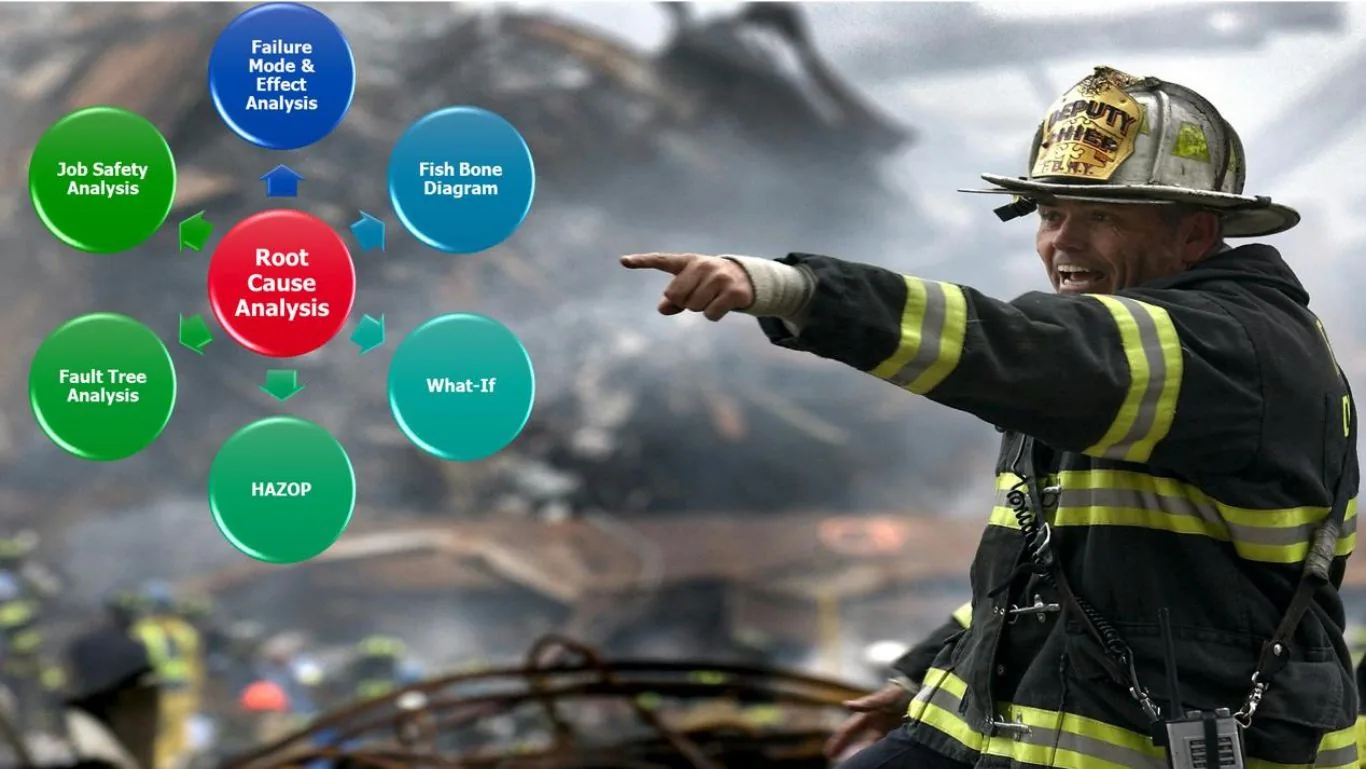
A different question from HAZOP
HAZOP starts from the process and asks how it can deviate from design intent. FMEA starts from the equipment and asks how each item can fail, what happens when it does, and whether anyone would notice.
That makes FMEA the better tool for rotating equipment, safety instrumented systems, packaged units and anywhere failure is about a component rather than a process deviation.
How it is scored
Each failure mode is rated for severity, occurrence and detection, and the product gives a risk priority number. Detection is the axis most often underrated: a failure that is severe and frequent but immediately obvious is frequently a smaller problem than a moderate failure nobody can see until the consequence arrives.
FMECA adds criticality, weighting failure modes by their contribution to overall system failure - useful when the study has to feed a maintenance strategy rather than a design change.
Where FMEA is used
- Safety instrumented systems, supporting SIL verification under IEC 61511
- Rotating equipment - compressors, pumps, turbines
- Packaged units bought as a black box, where the vendor's own analysis is the only one that exists
- Utility systems whose failure takes the process with them
- As the input to an RCM maintenance strategy
What we deliver
- Facilitated sessions with operations and maintenance in the room
- FMEA worksheets with failure mode, cause, local and system effect, current controls and detection method
- RPN ranking, with the scoring basis documented so it can be reapplied consistently later
- Ranked, owned actions - design change, added detection or revised maintenance task
Frequently asked questions
Should we do FMEA or HAZOP?
HAZOP for a continuous process with firm P&IDs. FMEA where the concern is equipment or system failure rather than process deviation. Many plants need both, on different scopes.
What is the difference between FMEA and FMECA?
FMECA adds a criticality analysis, weighting each failure mode by its contribution to system failure. Worth the extra effort when the output drives a maintenance strategy.
Who should be in the session?
Maintenance and operations above all - they know the failure modes that actually occur, which are rarely the ones in the manual. Plus process and instrumentation engineering.
How long does an FMEA take?
Two to four days of workshop for a defined system, plus preparation. Scope discipline matters: an FMEA of a whole plant at component level is rarely finished.





 As per MOEF & CC’s (Govt. of India) Office Memorandum F.
No. 22-34/2018-IA.III dated 9th August 2018 Self-Environmental Audit shall be conducted annually. Every
three years third party environmental Audit shall be carried out.
As per MOEF & CC’s (Govt. of India) Office Memorandum F.
No. 22-34/2018-IA.III dated 9th August 2018 Self-Environmental Audit shall be conducted annually. Every
three years third party environmental Audit shall be carried out.