 +(91) 9867215033
 info@ujjwalengineers.com
 Maharashtra, Gujarat, India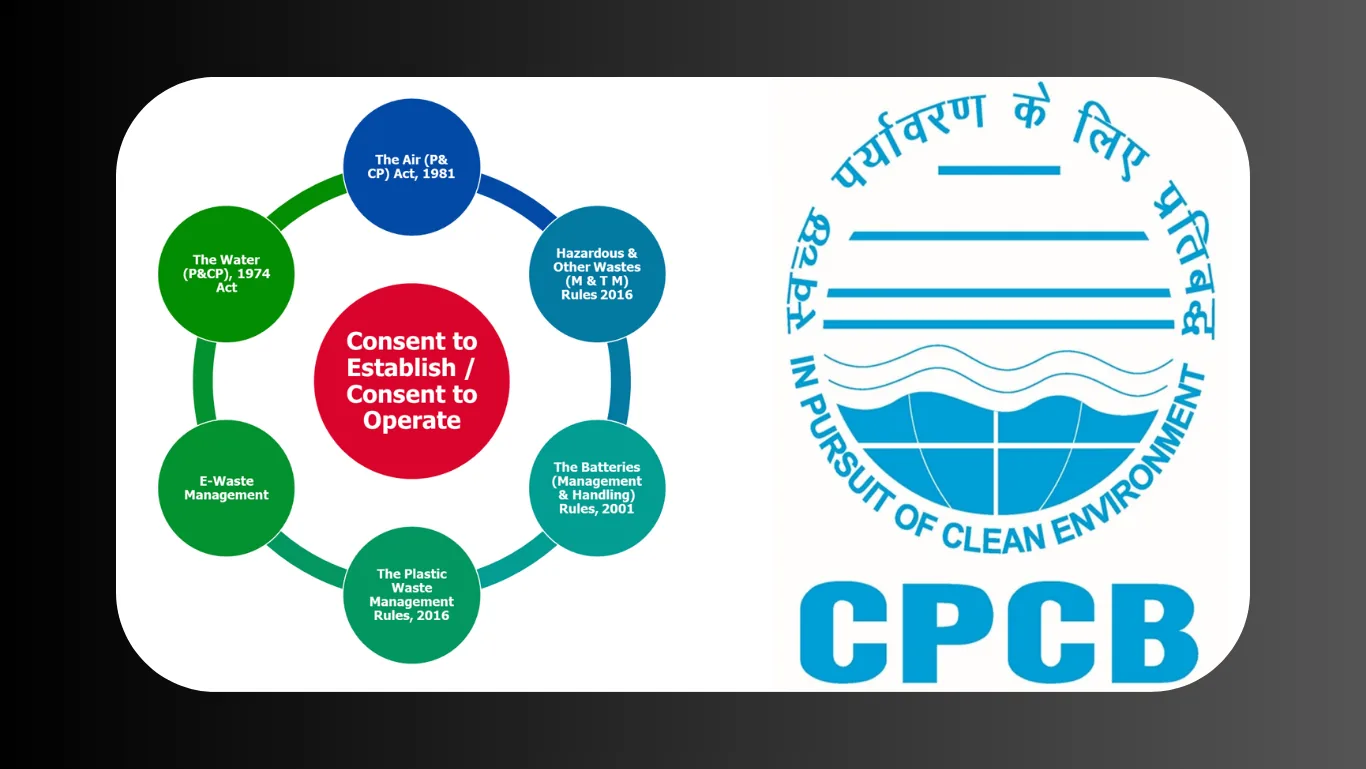
Consent work for a Taloja address, not a generic one
Taloja MIDC is a dense mixed estate - bulk drugs and intermediates, dyes and pigments, specialty chemicals, engineering and packaging units sharing the same road network, the same common effluent plant and the same airshed as Kharghar and Panvel. That density is why consent conditions here are written tighter than they are on greenfield estates, and why an application that would pass elsewhere gets queried at Taloja.
We prepare and file Maharashtra Pollution Control Board consents for units on the estate - first consent, renewal, amendment - and we do it with the monitoring evidence attached rather than promised.
What the consent cycle actually looks like
- Consent to Establish (CTE) - before construction. Category (Red, Orange or Green), capital investment slab, product list, water and effluent quantities, proposed pollution control equipment.
- Consent to Operate (CTO) - before commissioning, and granted against what was actually built, which is not always what was applied for.
- Renewal - on the strength of the compliance record for the period ending, not on the strength of the original application.
- Amendment - for a new product, added capacity, a changed fuel, a new stack or a change in effluent quantity.
The difference between the two consents is where most first applications go wrong. We have set out the distinction, and the sequence, in our guide to CTE versus CTO in Maharashtra and Gujarat.
The conditions Taloja units get held to
A consent is not a certificate you file away. It is a list of obligations with dates attached, and at Taloja the recurring ones are:
- Effluent quality at the point of discharge to the common effluent treatment plant, within the inlet parameters the CETP will accept - not merely "treated".
- Periodic stack emission monitoring and ambient air quality monitoring at the frequency written into your own consent.
- Hazardous waste stored, manifested and sent to an authorised facility, under a valid hazardous waste authorisation.
- Water cess returns and the annual Form V environmental statement filed by 30 September.
- Solvent and odour control, which on this estate draws complaints from the residential belt faster than anywhere else in the Navi Mumbai area.
Where consent work meets safety approvals
Many Taloja units are handling flammable solvents at a scale that brings a second regulator into the room. If your storage crosses the thresholds under the MSIHC Rules, the consent file and the safety file have to agree with each other - the same inventory, the same tank list, the same quantities. We build them together, which is why our major accident hazard and hazardous area classification work sits alongside the consent work rather than in a separate silo.
Why a Thane-district consultant is closer than it sounds
Our office is in Ambernath, which puts Taloja inside a normal working drive. Sampling teams reach the site the same morning, and an inspection query does not wait for someone to travel from another city. If your plant is on the Ambernath side of the belt instead, the same team handles environmental compliance in Ambernath MIDC; across the wider region the work is described on our Mumbai and Navi Mumbai page.
Talk to us about your consent
Send us your current consent copy and your product list, and we will tell you plainly whether you need a renewal, an amendment or a fresh application - and what is missing from the file before it goes in.
Frequently Asked Questions
Which MPCB office handles Taloja MIDC?
Taloja falls under the Raigad administrative district, and consent files for the estate are dealt with by the Maharashtra Pollution Control Board through its Navi Mumbai regional structure rather than through Thane. It matters, because the officer who inspects your unit is the one whose observations the consent conditions are written from.
Do I need Consent to Establish before I buy the plot?
Before you build, not before you buy. Consent to Establish is the permission to put up the plant, so it has to be in hand before construction starts. Units that pour foundations first and file afterwards end up regularising, which costs more and takes longer than applying in order.
How long does a Taloja consent renewal take?
Plan on filing four to six months before expiry. The scrutiny itself is not the slow part - the slow part is producing the compliance record for the consent period that is ending: monitoring reports, hazardous waste returns, CETP receipts. If that file is complete, renewal is straightforward.
Our product mix has changed. Is that an amendment?
Almost always, yes. Consent is granted against a declared product list and declared quantities. Adding a product, raising capacity, changing the fuel or adding a stack all need the consent amended. Operating outside the consented list is the single most common finding at inspection.
Can you also do the monitoring the consent conditions require?
Yes. Stack emission, ambient air, noise and effluent testing run through our own laboratory capability, so the sampling, the analysis and the submission to MPCB stay inside one accountable process instead of being handed to a subcontractor and waited on.





 As per MOEF & CC’s (Govt. of India) Office Memorandum F.
No. 22-34/2018-IA.III dated 9th August 2018 Self-Environmental Audit shall be conducted annually. Every
three years third party environmental Audit shall be carried out.
As per MOEF & CC’s (Govt. of India) Office Memorandum F.
No. 22-34/2018-IA.III dated 9th August 2018 Self-Environmental Audit shall be conducted annually. Every
three years third party environmental Audit shall be carried out.