
 +(91) 9867215033
 info@ujjwalengineers.com
 Maharashtra, Gujarat, India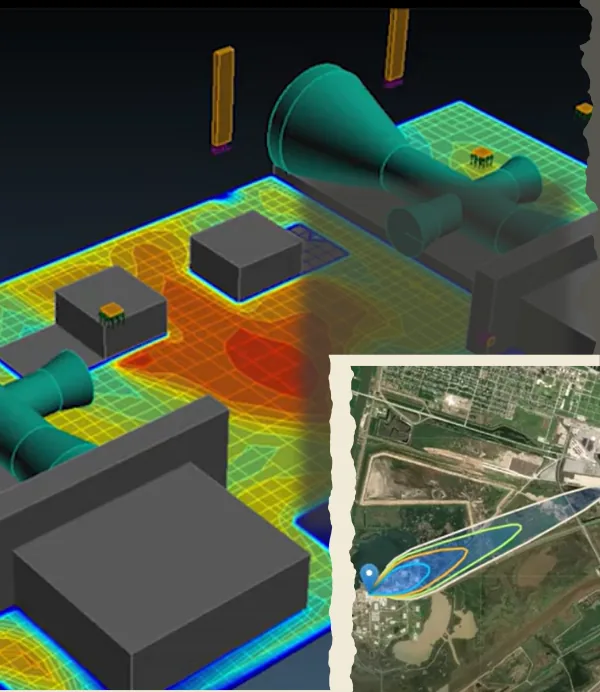
What the study decides
Hazardous area classification answers one question with expensive consequences: at any point in your plant, how likely is a flammable atmosphere to be present, and for how long? The answer becomes a zone, the zone decides what electrical and instrumentation equipment may be installed there, and that decision propagates into procurement, installation and every future modification.
Get it wrong in the conservative direction and you buy certified equipment you did not need. Get it wrong in the other direction and you have an ignition source sitting inside a zone nobody drew.
The standards we classify to
- IS/IEC 60079-10-1 - explosive gas atmospheres, Zones 0, 1 and 2.
- IS/IEC 60079-10-2 - combustible dust atmospheres, Zones 20, 21 and 22.
- IS 5572 for classification practice in Indian installations, and OISD-113 where the site falls under oil and gas guidance.
- PESO requirements, because for most licensed sites the classification drawing is part of what is submitted, not an internal document.
How we run it
- Source of release register - every flange, seal, vent, drain, sample point and loading arm that can release, with the grade of release assigned: continuous, primary or secondary.
- Material data - flash point, vapour density, lower explosive limit, auto-ignition temperature, gas group and temperature class, taken from your actual materials rather than a generic list.
- Ventilation assessment - degree and availability, indoors and out, because ventilation is what decides zone extent and is the input most often assumed instead of assessed.
- Zone extent calculation and the marking up of boundaries in both plan and elevation, which matters wherever a mezzanine, a pit or a trench lets a heavier-than-air vapour collect.
- Ex equipment gap list - installed equipment checked against the zone, gas group and temperature class it now sits in.
Where classifications fail review
The recurring failures are consistent enough to list. Zone extent taken from a table without the ventilation that table assumed. Indoor areas classified as though they were outdoors. Dust areas left out entirely. Gas group and temperature class omitted, so the drawing cannot actually be used to specify equipment. And classification drawings that were never revised after a plant modification, which means the document on the wall describes a plant that no longer exists.
What it connects to
Classification is not a standalone deliverable. The release sources it registers are the same ones a HAZOP examines and a fire and explosion risk analysis quantifies. The zones it draws decide where fire and gas detector mapping has to achieve coverage. And for sites above the MSIHC thresholds, the classification is part of the evidence behind the major accident hazard case and the quantitative risk assessment.
Where we work
We run classification studies across Indian process industry, with most of our site work in the Mumbai, Navi Mumbai and Thane belt - solvent handling units in Taloja MIDC, chemical and pharma plants around Ambernath and Badlapur, and the coastal and Gujarat sites where flammable storage is the dominant hazard.
Ask for a classification review
Send us your plot plan, your material list and your existing classification drawing if you have one. We will tell you whether it still describes your plant, and what a current study would change.
Frequently Asked Questions
What is the difference between a zone and a division?
They are two systems for the same idea. Zones 0, 1 and 2 come from the IEC and Indian standards and are what Indian plants are normally classified under. Divisions 1 and 2 come from the North American system. Mixing the two on one drawing is a common and expensive error, because the equipment certifications do not map across cleanly.
Who asks for a hazardous area classification?
PESO, during licensing of flammable storage and handling. Insurers, at survey. Electrical inspectors, before energising. And your own electrical design team, who cannot specify a single field instrument in a flammable area without it. In practice the study is asked for late and needed early.
Can we not just copy the classification from a similar plant?
You can, and it is one of the reasons classifications fail review. Zone extent is a function of release rate, ventilation and the properties of the specific material - a borrowed drawing carries someone else's ventilation assumption into your building. If your layout or your material differs at all, so does the answer.
Does this cover combustible dust?
It does, and it is usually the part that has been skipped. Dust classification runs under IEC 60079-10-2 as Zones 20, 21 and 22, and it applies to powder handling, drying, milling and bagging areas that are often left off the gas classification drawing entirely.
What do we actually receive?
Marked-up plant layout drawings showing zone boundaries in plan and elevation, a source-of-release register, the gas group and temperature class for each area, and a gap list of installed equipment whose certification does not match the zone it now sits in. The gap list is normally the item that gets acted on first.





 As per MOEF & CC’s (Govt. of India) Office Memorandum F.
No. 22-34/2018-IA.III dated 9th August 2018 Self-Environmental Audit shall be conducted annually. Every
three years third party environmental Audit shall be carried out.
As per MOEF & CC’s (Govt. of India) Office Memorandum F.
No. 22-34/2018-IA.III dated 9th August 2018 Self-Environmental Audit shall be conducted annually. Every
three years third party environmental Audit shall be carried out.