+(91) 9284844427
 info@ujjwalengineers.com
 Maharashtra, Gujarat, India
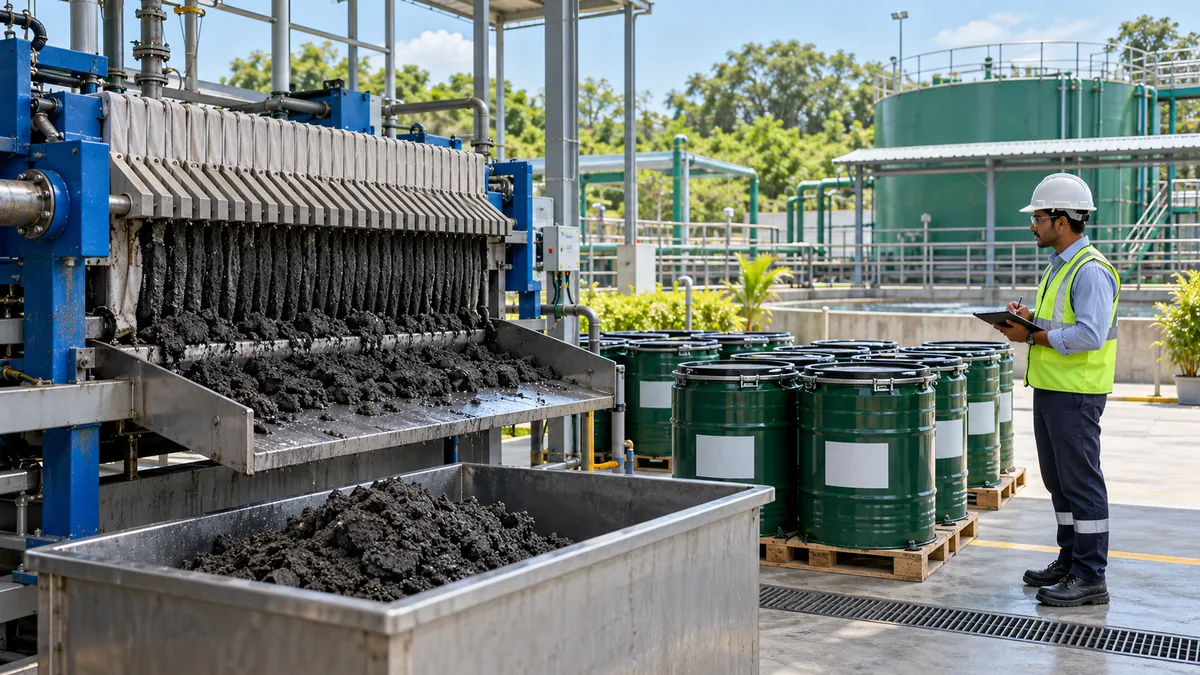
ETP sludge is the concentrated residue of wastewater treatment. Poor dewatering increases transport cost, while open storage, mixing of waste streams or incomplete records can create environmental and compliance risks. The correct route depends on the sludge characteristics, authorisation and acceptance criteria of the receiving facility.
This ETP sludge management checklist covers dewatering, storage, documentation and authorised disposal for industrial units in India. Always follow the applicable consent, hazardous-waste authorisation, facility acceptance conditions and current regulatory requirements.
Never classify sludge by appearance alone. Maintain process knowledge and representative laboratory evidence so the waste category, hazards and disposal route are properly supported.
1. Measure sludge generation at the source
Track wet sludge, dewatered cake, dry solids and the operating period. Link unusual increases to production, chemical dosing, clarifier performance or biological solids wasting. A monthly mass balance can reveal poor dewatering, uncontrolled dilution or record gaps.
2. Optimise conditioning and dewatering
Confirm filter-press cloth condition, feed pressure, cycle time, polymer preparation and operator practice. Excess conditioning chemical can increase cost and sometimes add solids. Record cake moisture and filtrate quality so improvement is based on data rather than appearance.
3. Characterise and segregate the waste
Keep sludge from different processes separated unless mixing is approved and technically justified. Use an appropriate laboratory and sampling plan for required parameters. Review the result whenever raw materials, process chemistry or treatment chemicals change materially.
4. Maintain a controlled storage area
Use compatible, closed containers or a covered impervious area with drainage control. Protect waste from rain, prevent leakage and display the required identification and hazard information. Maintain access for inspection, spill-control materials and a current inventory.
5. Verify the authorised disposal route
Check the receiving facility and transporter credentials for the relevant waste and operation. Match the waste description and quantity across authorisation, label, manifest, weighment and receiver acknowledgement. Investigate repeated differences between dispatched and received weights.
6. Reconcile records every month
Opening stock plus generation minus dispatch should equal closing stock. Reconcile operating logs, storage inventory, manifests, weighment slips, invoices and annual-return data. Record the reason for any adjustment and obtain approval through the site's document-control process.
Sludge area inspection checklist
- Waste category and disposal route match current authorisation.
- Filter press and sludge-transfer equipment are leak-free.
- Containers are closed, compatible and correctly identified.
- Storage is covered with an impervious, controlled floor.
- Inventory, manifests and receiver acknowledgements reconcile.
- Emergency equipment and inspection records are current.
For treatment-process review, visit our ETP consultancy service. For authorisation and manifest controls, see hazardous waste compliance support.
Frequently Asked Questions
Is all ETP sludge hazardous waste?
Classification depends on the generating process, applicable schedules, characteristics and regulatory determination. Use process knowledge and proper evidence instead of a blanket assumption.
Can sludge be stored in an open drying bed?
The approved method and design must prevent rainwater entry, leakage and uncontrolled runoff. Check the unit's consent and authorisation conditions before using any storage or drying arrangement.
Why does filter-press cake remain very wet?
Possible causes include unsuitable conditioning, low feed solids, worn cloth, insufficient pressure, short cycle time or equipment problems. Review the full operating data before changing chemical dose.
Need an ETP and sludge-management review?
Ujjwal Engineers can assess sludge generation, dewatering performance, storage controls and compliance records.
Discuss ETP Support